

How to Build a Plus Size Capsule Wardrobe in 7 Steps
Quick Summary
A plus size capsule wardrobe is a small set of versatile, well-fitting pieces that mix and match into many outfits. Most capsules use 20 to 40 pieces, and the goal is to wear what you own instead of buying more. Each piece should work with at least three others.
- Most capsules use 20 to 40 pieces.
- Plan around your real weekly activities, aiming to cover at least 80% of your outfits.
- Judge closet items by fit, wear count over three months, and cost per wear.
- Build an outfit matrix of four to six tops and three to four bottoms to count wearable pairings.
- Shop in phases, buying essentials first and filling gaps with one quality piece each month.
Table of Contents
- What a Plus Size Capsule Wardrobe Is and Why It Works
- Step 1: Plan Your Wardrobe Around Your Daily Activities
- Step 2: Assess and Edit Your Current Closet
- Step 3: Choose Versatile Pieces That Fit and Mix Easily
- Step 4: Build an Outfit Matrix and Plan Summer Layers
- Step 5: Shop in Phases on an Affordable Budget
- Booking Your First Wardrobe Edit Starts With One Piece
- Frequently Asked Questions
What a Plus Size Capsule Wardrobe Is and Why It Works
A plus size capsule wardrobe is a small set of versatile, well-fitting pieces that mix and match into many outfits. Most capsules use 20 to 40 pieces, and the goal is to wear what you own instead of buying more. Each piece earns its place by working with at least three others.

This approach helps in a few clear ways. It cuts decision fatigue every morning. It also keeps spending focused on clothes that fit your body, which matters when many shops still get proportions wrong. An exploratory study published in the International Journal of Market Research reported that participants who tried a three-week capsule wardrobe felt less stressed and less detached from fashion trends (exploratory study on capsule wardrobes in the International Journal of Market Research).
Why does it work for plus-size shoppers? Fit is the real problem. A smaller set of pieces that fit well is often more useful than a full closet of clothes that don't. An inclusive size range, from XSMALL to 6XLARGE, makes it easier to build that set around your own measurements.
- Fewer pieces: Less clutter and faster outfit choices
- Better fit: Every item is chosen for your shape
- Lower waste: You buy less and wear more of what you own
The key is planning. Work through the steps below, and you'll end up with a wardrobe that suits your life.
Step 1: Plan Your Wardrobe Around Your Daily Activities
Start with your week, not with a shopping cart. List where you go and what you wear there. Work, errands, family events, workouts, and weekend plans each need different clothes.
Write a simple list:
- Work days: How formal is the dress code?
- Casual days: What do you wear for errands and coffee?
- Occasions: Which events need one dressier outfit?
- Weather: What temperatures do you face most months?
A common mistake is building a wardrobe for the life you wish you had. Plan for the days you actually live. Your capsule should cover at least 80% of your real outfits.
Step 2: Assess and Edit Your Current Closet
Editing works best when each item is judged against the same few criteria instead of a gut feeling. Pull everything out, sort it into keep, fix, and let go, and then test the keep pile against fit, wear frequency, and cost per wear before anything returns to the rack.
Start with fit, because it decides whether an item can join the capsule at all. Check the garment's measurements rather than its label. Lay a favorite well-fitting top flat and measure across the chest, waist, and hem. Compare those numbers with the same measurements on a piece that feels bad to wear. Pay attention to ease, the extra room built into the garment beyond your body. Too little ease creates pulling at the bust or hips, and too much makes a fitted style look shapeless. Stretch recovery matters too: a knit that stays stretched out after a few hours of wear will never look right, however good it looked on the hanger.
Next, count wear. Think about the last three months and mark each piece you wore at least once. Items with no marks belong in the let-go pile unless they are seasonal, in which case set them aside for their season and check again.
Finally, estimate cost per wear for the keep pile. Divide what you paid by the number of times you have worn an item, or by the number you realistically expect to wear it. A $60 pair of jeans worn forty times costs $1.50 per wear, while a $20 top worn twice costs $10 per wear. Cost per wear makes it obvious which purchases are paying off and which are not, and it helps you decide whether a repair is worth the time.
The fix pile deserves the same discipline. A hem or a loose button is worth fixing when the garment already fits well and you wear it regularly. Ask whether a local tailor's fee would still leave the piece cheaper per wear than a replacement. If the fit itself is wrong, a repair rarely solves it, and that item usually belongs in the let-go pile.
Once you finish sorting, count what remains. A capsule built from the keep pile is the foundation, and any gap you find while working through the outfit matrix becomes the first item to shop for.
Step 3: Choose Versatile Pieces That Fit and Mix Easily
Focus on pieces that work together. Neutral colors and soft shades make mixing simpler. A palette of black, white, navy, and one or two accent colors covers most outfits.
Build around these core categories:
- Tops: Basic tees, a button-down, and a sweater
- Bottoms: Jeans, wide-leg trousers, and a skirt or pants for work
- Layers: A blazer or light jacket for polish
- Dresses: One everyday dress and one occasion dress
For fit, short-waisted shoppers often need to check where a top hits the body. Use a size chart and measure your bust, waist, and hips before buying. Our plus size dress size chart guide can help you compare numbers.
Here's a simple example. The Full Size Ribbed Knit Raglan Sleeve Sweater Plus Size is a relaxed crew-neck piece that can be worn untucked or tucked into a skirt, and its ribbed knit suits jeans or simple trousers.

Step 4: Build an Outfit Matrix and Plan Summer Layers
An outfit matrix turns a vague sense of versatility into a countable number. Lay your pieces out in a grid: tops run across the top row, bottoms run down the left column, and each cell where the two combine into a wearable look becomes one outfit. A versatile option to anchor the grid is the full size single-breasted blazer with gold button accents, which layers across many outfits. The grid works because it forces you to test every pairing instead of relying on memory, which is where most capsules quietly fail.
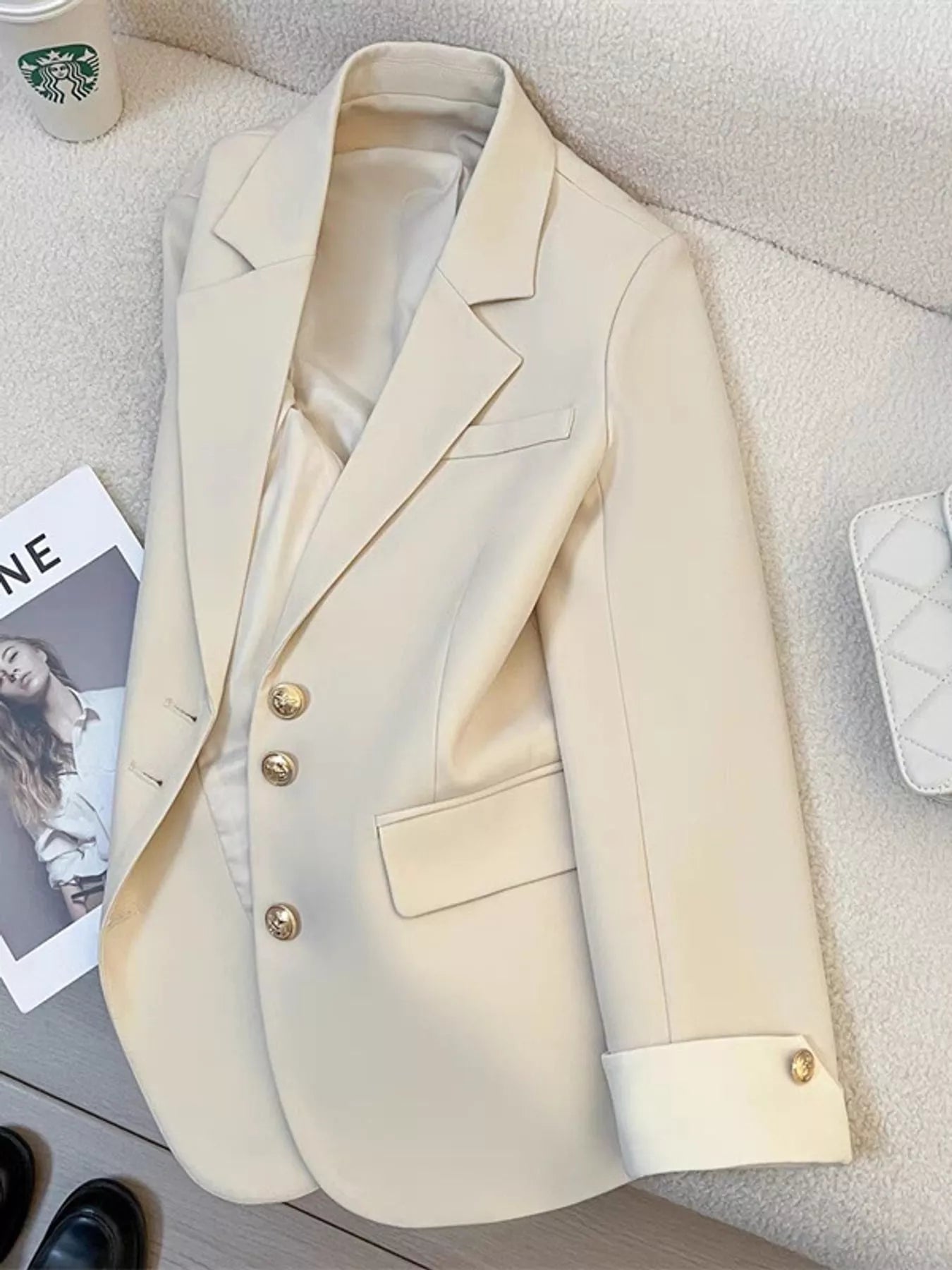

Here is how it works with a small example. Suppose you own four tops (a basic tee, a ribbed sweater, a longline button-down, and a knit tank) and three bottoms (wide-leg jeans, a pull-on skirt, and tailored trousers). That is twelve possible pairings. Mark each combination you would actually wear to work, to run errands, or to an evening event. Most readers find that three or four cells in each row are empty. Those empty cells are your shopping list, and they are more useful than any generic "must-have" list because they show exactly which gap a new piece fills.
To make the matrix measurable, add a third dimension for layers. Mark which outfits need a jacket or a shirt worn open over them. Then count the total outfits you can produce. A capsule that yields fewer than two wearable outfits per piece is usually carrying too many pieces that only pair with one other item.
Summer changes the grid in a specific way. Heat removes the layers that make many winter combinations work, so the summer matrix leans on breathable fabrics and on one or two light layers that do double duty. A longline button-down worn open over a tee can cover the shoulders for a midday meeting and then be left open for a casual afternoon. A lightweight blazer can turn wide-leg jeans and a tee into a work-ready look. Choose layers that change an outfit's category, not just its warmth, because a layer that only adds warmth is one you will leave at home.
Watch out: a matrix that ignores fit will show you outfits that look balanced on paper but feel wrong in practice, so test each cell in the mirror before you count it.
- Build the grid with four to six tops and three to four bottoms
- Count only the combinations you would wear without hesitation
- Mark which summer combinations depend on a light layer
- Aim for each core piece to appear in at least three working outfits
The outfit matrix makes the capsule's versatility countable, and summer layers change the grid in a specific way.
| Matrix step | What to count or do | Target |
|---|---|---|
| Grid setup | Tops across the top, bottoms down the side | 4-6 tops, 3-4 bottoms |
| Pairings | Combinations you would wear without hesitation | Count only confident cells |
| Layers | Outfits that need a jacket or open shirt | Mark summer layers |
| Output check | Wearable outfits per piece | At least two per piece |
| Core coverage | Working outfits each core piece appears in | At least three |
Step 5: Shop in Phases on an Affordable Budget
You don't need to buy everything at once. Shop in phases so your budget stays manageable and each purchase fills a real gap.
Phase one covers your essentials: two or three tops, one pair of bottoms, and one layer. Phase two adds a dress or work piece. Phase three fills in extras and seasonal items.
Set a monthly limit and stick to it. Many shoppers find that buying one quality piece each month builds a strong capsule faster than a single large haul.
Booking Your First Wardrobe Edit Starts With One Piece
Building a plus size capsule wardrobe is simple when you start small. Plan your days, edit your closet, choose versatile pieces, map your outfits, and shop in phases. Each step makes the next one easier.
Pick one item from your list today and check how it fits with what you already own. That single decision is the start of a wardrobe that works for you. Explore our collection at Blue Zone Planet to find your first piece.
Frequently Asked Questions
What should be in a plus size capsule wardrobe?
A plus size capsule wardrobe usually centers on a small set of versatile pieces that work together: a few tops and layering pieces such as a button-down shirt, a crew-neck sweater and a blazer, two or three bottoms like wide-leg jeans or work pants, and one or two dresses that work for both day and occasion wear. Choose a cohesive neutral or soft color palette so every piece mixes with the others. Prioritize fit first, since a well-fitting piece is worn far more often than a trendy one that pulls or gapes.
How many pieces should a plus size capsule wardrobe have?
Most capsule wardrobes fall between 12 and 37 pieces, depending on your lifestyle and climate. A smaller set of about 12 key pieces can create a useful number of outfit combinations when your tops and bottoms coordinate with one another. Start with the number of outfits you need each week, then add pieces only when they fill a gap in your outfit matrix. The right number is the one you can dress from without feeling you have nothing to wear.
How do I build a plus size capsule wardrobe on a budget?
Build your capsule in phases instead of buying everything at once. Start with the two or three pieces that cover your most frequent activities, such as jeans and a blazer for work and casual plans. Spend more on pieces you will wear most, like outerwear and well-made bottoms, and buy basics like tees in fewer, durable fabrics. Check your existing closet first, since many items you already own may fit the plan once you add a few key pieces.
Can I build a plus size capsule wardrobe with clothes I already own?
Yes. Begin by sorting your closet into pieces you wear often, pieces that fit well but are rarely worn, and pieces that no longer fit or flatter. Keep the items that fit and suit your daily life, then note the gaps. Those gaps, such as a missing layering piece or a versatile bottom, are the only items you need to buy. This approach keeps the wardrobe practical and reduces unnecessary spending.
